

B.Tech Electronics & Communication Engineering at ACEM builds strong foundations in electronic devices, digital systems, communication networks, microprocessors, VLSI, signal processing, and modern wireless technologies.
Academic Excellence
Students Enrolled
Modern Campus
Electronics & Communication
ECE College in Faridabad

The Department of Electronics & Communication Engineering, with an intake of 30 seats, deals with electronic devices, circuits, communication equipment such as transmitters, receivers, and integrated circuits (IC).
It also emphasizes on the basic electronics, analog and digital transmission & reception of data, voice and video (Example AM, FM, DTH), microprocessors & microcontrollers, satellite communication, microwave engineering, antenna and wave propagation.
It aims to deepen the knowledge and skills of the students on the basic concepts and theories that will equip them in their professional work involving analysis, systems implementation, operation, production, and maintenance of the various applications in the field of ECE.
The updated department content emphasizes design capability, analytical skills, problem-solving, and practical implementation across electronics, communication, signal processing, and intelligent embedded applications.
ECE graduates contribute to telecom, semiconductor, consumer electronics, embedded product development, automation, and next-generation communication systems.
Admission Process Contact Admission OfficeThe B.Tech Electronics & Communication Engineering program spans four years and eight semesters, combining classroom learning, laboratory practice, workshops, technical assignments, industrial training, and project work.
Students build the base through fundamentals of electronics, basic electrical engineering, electronic components, workshop practice, measurements, and introductory laboratory work.
Students study semiconductor devices, network theory, analog electronics, electromagnetic theory, and digital electronic systems with practical circuit analysis and testing.
Advanced subjects include microprocessors and microcontrollers, embedded systems, VLSI concepts, microwave engineering, and communication-focused hardware implementation.
Students focus on digital signal processing, antenna and wave propagation, mobile communication, optical fiber communication, satellite communication, and major project or industrial training.
The curriculum is directed to applications in major areas such as telecommunications, energy and electronics sectors, while encouraging the development of necessary skills for the integration of hardware and software components.
Empowering students with strong career outcomes and industry exposure
Highest Package
Average Package
Placement Rate
Recruiting Companies
The updated course pathway prepares students for careers in electronics design, telecom systems, embedded solutions, semiconductor processes, automation, and communication technology industries.
Graduates develop practical expertise in circuits, communication systems, signal processing, device behavior, and embedded applications through labs, assignments, workshops, internships, and project-based learning.
ACEM supports ECE students with placement readiness, technical training, internships, and mentoring aligned with electronics industries, telecom, semiconductor firms, automation environments, and IT-enabled technical roles.






The Department of Electronics and Communication Engineering believes in providing an academic environment by delivering excellent engineering graduates with sound knowledge and producing competent professionals with innovative new technologies, analytical & leadership skills meeting industry demand.
The department provides a value-based education environment for the benefit of society.
The department works to produce excellent Electronics and Communication Engineers with sound knowledge, innovative skills and entrepreneurial skills.
The ECE department emphasizes Project/Practical Based Learning for deep understanding of Electronic Circuits / PCB Design, IoT, Embedded Systems, VLSI, MATLAB etc.
A variety of teaching methods, ranging from lectures and group tutorials, flip classes, MOOC / NPTEL to small groups in laboratories are being used.
Students demonstrate the ability to analyze, design and improve practical hardware systems and work well on team-based Engineering projects.
Industrial visits, seminars, workshops, and project work help students connect theory with real-world electronics and communication applications.
The Department of Electronics and Communication Engineering at the Aravali College of Engineering and Management believes in providing an academic environment by delivering excellent engineering graduates with sound knowledge and producing competent professionals with innovative new technologies, analytical & leadership skills meeting industry demand, including value-based education to benefit the society and nation at large.
To produce excellent Electronics and Communication Engineers with sound knowledge.
To produce excellent engineers with innovative and entrepreneurial skills.
To provide analytical & leadership skills meeting industry demand.
To provide a value-based education environment for the benefit of society.
The Department of Electronics & Communication Engineering, with an intake of 30 seats, deals with electronic devices, circuits, communication equipment such as transmitters, receivers, and integrated circuits (IC).
It also emphasizes on the basic electronics, analog and digital transmission & reception of data, voice and video (Example AM, FM, DTH), microprocessors & microcontrollers, satellite communication, microwave engineering, antenna and wave propagation. It aims to deepen the knowledge and skills of the students on the basic concepts and theories that will equip them in their professional work involving analysis, systems implementation, operation, production, and maintenance of the various applications in the field of ECE. The curriculum is directed to applications in major areas such as telecommunications, energy and electronics sectors, while encouraging the development of necessary skills for the integration of hardware and software components.
Demonstrate the ability to analyze, design and improve practical hardware systems.
Show the ability to communicate effectively and work well on team-based Engineering projects.
Get success in entry-level electronics Engineering positions.
Pursue higher studies and research successfully.
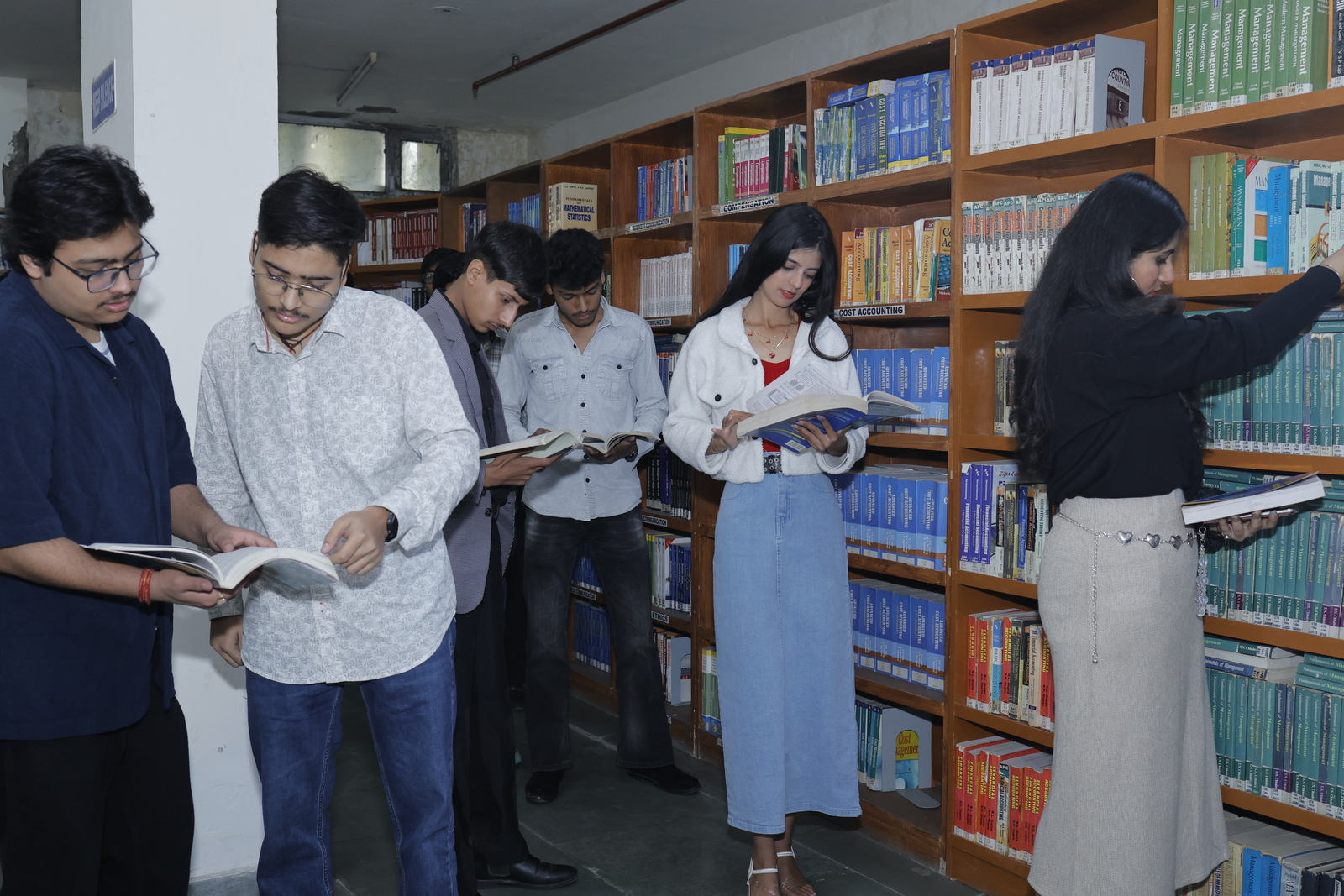
The ECE department emphasizes Project/ Practical Based Learning for deep understanding of Electronic Circuits / PCB Design, IoT, Embedded Systems, VLSI, MATLAB etc. Also, a variety of teaching methods, ranging from lectures and group tutorials, flip classes, MOOC / NPTEL to small groups in laboratories are being used. Students are encouraged to use additional recommended reading material for study from the library to consolidate the learning process and to broaden and deepen their understanding.
There is guaranteed huge demand for competent Engineers in the Electronics industry to cope with this demand in Technology. Electronics and Communication Engineers can specialize in the design and manufacture of Electronic devices and systems, the installation, maintenance and repair of Electronic systems and equipment.
Job Options: VLSI / Chip Design / Consumer Electronics manufacturing; Wireless Communication; Image Processing / Digital Signal Processing; Mobile Communication (2G,3G,4G,5G); Internet technologies; Power Electronics; Steel, petroleum and chemical industry, directing control and testing production process; Automobile / Electric Vehicle; Embedded Systems / Microprocessor & Microcontroller; IoT /AI; Mechatronics.
They may also work with computers and electronic equipment in the fields of Medical, Manufacturing, Industrial Control, Telecommunications, Aeronautical and Military fields.
Department roadmap across focus areas, learning tracks, industry roles and companies.
| Focus Area / Domain | 2nd Year | 3rd Year | 4th Year | Industry | Roles | Companies / Organizations |
|---|---|---|---|---|---|---|
| VLSI Design / Chip Design / Analog and Digital IC Design | Electronics Devices, Digital System Design, Network Theory, Analog Circuits, Signal and Systems | CMOS Design, Verilog/VHDL | Industrial Visit, Workshop, Webinar, NPTEL | Semiconductor Industry | VLSI Design Engineer, Verification Engineer, Physical Design Engineer | Intel, AMD, Qualcomm, MediaTek, Cadence |
| Embedded Systems, IoT applications, AI/ML | Digital System Design, Microprocessors & Microcontrollers, Computer Architecture | Electrical Measurement and Instrumentation, 5G | Project, Workshop, Webinar, NPTEL | Manufacturing, Healthcare, Agriculture, Transportation, and consumer electronics | Designing, Developing, and testing the Embedded software that powers IoT devices | Texas Instruments, Intel, Bosch, Honeywell |
| Consumer Electronics, Automotive Electronics, Medical Devices | Electronics Devices, Digital System Design, Network Theory, Analog Circuits, Signal and Systems, PCB Design | Digital Signal Processing, MATLAB | Display Devices | Electronics Hardware Industry | Hardware Engineer, PCB Designer, Test Engineer | Samsung, LG, Bosch, Tata Electronics |
| Radar Systems, Satellite Communication, Avionics | Network Theory, Analog Circuits, Signal and Systems, PCB Design | Electromagnetic Waves, Microwave Theory & Techniques | Antenna and Propagation, Satellite Communication | Defence & Aerospace | Systems Engineer, Electronics Engineer, R&D Engineer | DRDO, ISRO, HAL, BEL |
| Software Development, Mobile App Development | C/C++, Python (NPTEL), Workshop, Webinar, Industrial Visit | C/C++, Python (NPTEL), Workshop, Webinar, Industrial Visit | C/C++, Python (NPTEL), Workshop, Webinar, Industrial Visit | Software & IT Services | Software Developer, System Engineer, Technical Consultant | TCS, Infosys, Wipro, Accenture, IBM |
| Tele communication & RF Design, Networking | Analog and Digital Communication, Network Theory, Computer Network | Electromagnetic Waves, Mobile Communication Network, 5G | Antenna and Propagation, Fiber Optic Communication | Telecommunications Industry | Telecom Engineer, RF Engineer, Network Engineer | Airtel, Jio, BSNL, MTNL, Ericsson, Nokia |
An Industrial visit was organized on 12th November, 2025 for the Students of ECE 3rd, 5th and 7th Semester, ACEM, Faridabad at Truechip Solutions, Noida. Total 20 Students and 03 Faculty members visited Truechip Solutions, Noida. Truechip, the Verification IP specialist, is a leading provider of Design and Verification solutions - which helps to accelerate design, lowering the cost and the risks associated with the development of ASIC, FPGA and SOC. Truechip is a privately held company, with a global footprint and sales coverage across North America, Europe and Asia. Truechip has been serving customers since last 10 years in VLSI with a strong and experienced leadership. Truechip provides industry’s first 24x5 support model with specialization in VIP integration, customization and SOC Verification.
An Industrial visit was organized on 9th August, 2024 for the Students of B. Tech. ECE 3rd, 5th and 7th Semester, ACEM, Faridabad at Truechip Solutions, Noida. A total of 20 Students and 03 Faculty members visited Truechip Solutions, Noida. Truechip, the Verification IP specialist, is a leading provider of Design and Verification solutions, which help to accelerate design, lowering the cost and the risks associated with the development of ASIC, FPGA and SOC. Truechip is a privately held company, with a global footprint and sales coverage across North America, Europe and Asia. Truechip has been serving customers for the last 10 years in VLSI with a strong and experienced leadership. Truechip provides the industry’s first 24x5 support model with specialization in VIP integration, customization and SOC Verification.
An industrial visit was carried out at MTNL (Mahanagar Telephone Nigam Ltd.), New Delhi, on 12th May, 2023, for ECE 6th, 4th and 2nd Semester students. The goal of the industrial visit was to achieve a better understanding and practical exposure of Mobile Communications Systems. A total of 17 students and 2 Faculty members were part of this industrial visit. They were taught about GSM, types of antennas, optical fibre cable, broadband connectivity, switching, and the actual working of these units.
A visit was carried out at Tughlakabad Railway Station on 5th May, 2023 for ECE 6th and 4th Semester students. The goal of the visit was to achieve a better understanding and practical exposure of IoT, RFID, etc. A total of 10 students and 1 Faculty member were part of this industrial visit.
Batch: B. Tech. Electronics and Communication Engineering (2015-19), ACEM, Faridabad. AMD (Advanced Micro Devices), Hyderabad.
Currently, I'm working for AMD (Advanced Micro Devices) in Hyderabad. What I can say about ACEM, it's a place that converts a plant like me into a tree. Wherever I am today all because of the guidance and freedom to do the right things, which we get in ACEM. Thanks for all the things.
Batch: B. Tech. Electronics and Communication Engineering (2015-19), ACEM, Faridabad. Senior Design Engineer, STMicroelectronics (Gr. Noida).
I joined the Electronics and Communication Department of Aravali College of Engineering and Management in the year 2015. Joining this college not only gave me a good exposure to academics through practical sessions, field visits, industrial training, and extracurricular activities, but the strong academic curriculum and motivation from faculty helped me move higher in my academic career.
Batch: B. Tech. Electronics and Communication Engineering (2017-21), ACEM, Faridabad. Tata Consultancy Services Ltd.
My journey in Aravali College of Engineering and Management is a memorable one. I got to learn a lot, not only about my subject but also practical knowledge through opportunities that helped me present myself better at present. The Placement cell of college helped me to appear for various interviews of different companies.
Batch: B. Tech. Electronics and Communication Engineering (2017-21), ACEM, Faridabad. Tata Consultancy Services Ltd.
I appreciate the Electronics and Communication Engineering department for its commitment to fostering a dynamic learning environment. The faculty's extensive expertise in areas like signal processing and telecommunications has greatly enriched the learning experience. Their dedication to staying abreast of industry advancements and integrating practical applications into the curriculum is commendable. The department's emphasis on research and innovation reflects a forward-thinking approach that benefits students and contributes to the field. Overall, I commend the ECE department and its faculty for their unwavering commitment to excellence.
B. Tech. ECE 7th Semester, 2023.
Aravali College has very good infrastructure. The classes are very nice, college has a canteen which provides fresh and hygienic food. College also have hostel facilities for both boys and girls. The library of college is also very well maintained. All faculty and staff members are very qualified and helpful.
B. Tech. ECE 7th Semester, 2023. Infosys Ltd.
Good infrastructure, enormous ground. All necessary equipment are available. Smart classes are available. Well managed libraries, well managed sports committee, canteen facilities provided, hygienic environment, highly professional staff providing good quality education, helpful teachers, well educated teachers, updated curriculum includes all recent developments in the field, high qualified, well coordinated placements and ready to apply for job. Equal chances for representing ourselves.
Approved best practices of the Department of Electronics and Communication Engineering.
Objectives of the Practice: To bridge the gap between theoretical concepts and real-world applications; to develop problem-solving, analytical, and critical thinking skills; to promote teamwork, communication, and leadership abilities; to enhance creativity, innovation, and design capabilities; and to improve the employability and industry readiness of students.
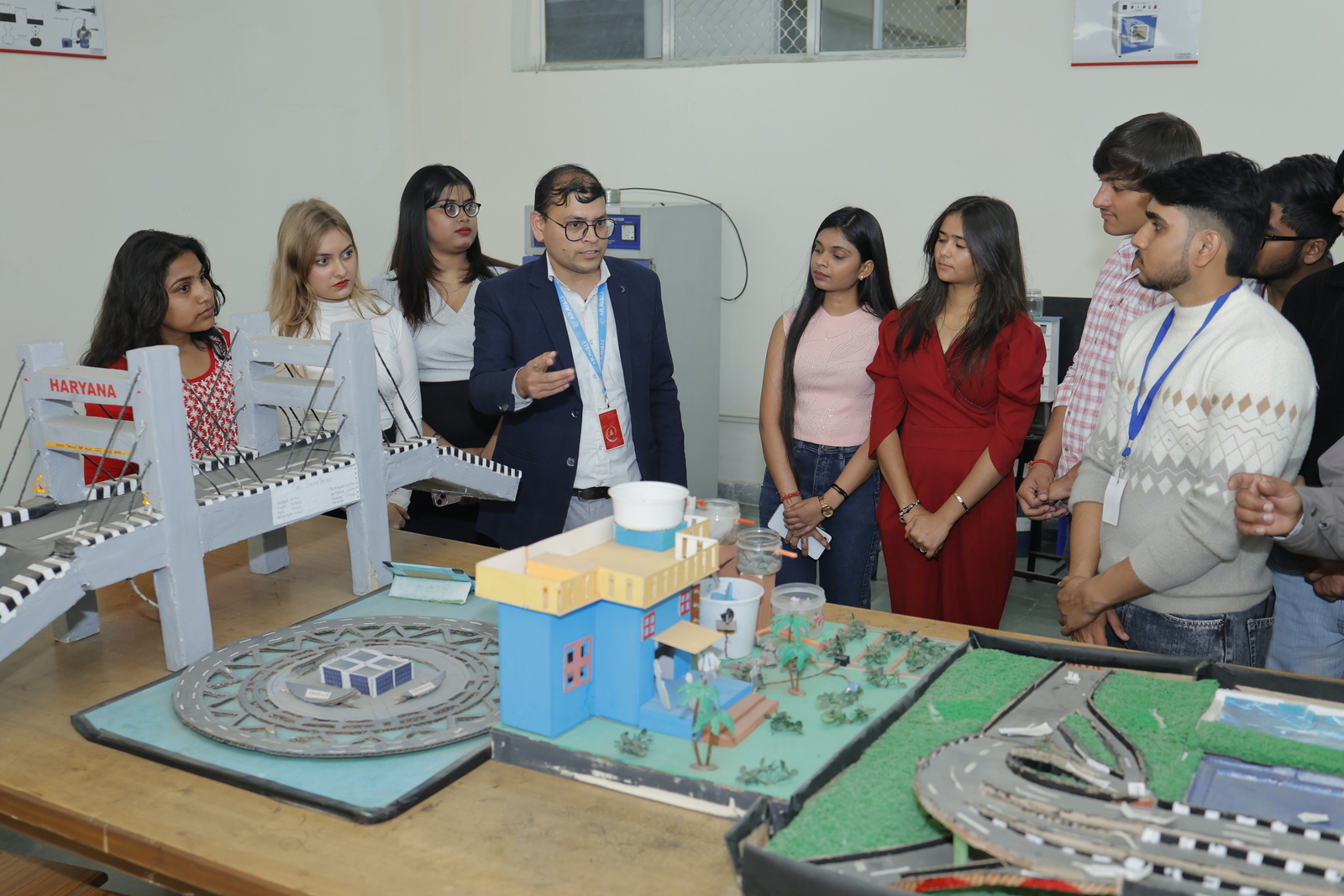
The department has systematically integrated Project-Based Learning across the curriculum. Mini projects are assigned to second- and third-year students, while final-year students undertake major projects based on industry problems or research themes. The Students are encouraged to identify problems, conduct literature surveys, and develop feasible solutions through design, analysis, and prototype development. Faculty members act as mentors, guiding students throughout the project lifecycle.
The Electronics and Communication Engineering Department emphasis on project/ practical based learning for deep understanding of electronic circuits / PCB Design, IoT, Embedded Systems, VLSI, MATLAB etc. Evaluation is based on innovation, design, teamwork, implementation, and presentation skills. Industry experts are also invited for project evaluation to ensure practical relevance.
Evidence of Success: Improved academic performance and conceptual understanding among students; increased participation in technical competitions, exhibitions, and hackathons; development of innovative prototypes and working models; enhanced placement opportunities and industry interaction; and student publications in journals and conference presentations.
Objectives of the Practice: To foster healthy and positive professional relationships between students, teachers and other stakeholders; to identify student's academic needs and help them acquire strong foundational knowledge in Engineering, Science and Technology; to nurture creative minds and help them do innovative projects with social relevance as nation builders; to help students identify their areas of interest and groom them to achieve their career goals; and to cultivate moral values and healthy learning habits.
Based on experience and expertise, suitable mentors are identified to whom mentees are allotted in a ratio of 1:20. Mentors are duly assisted by other faculty members in providing individual care, counselling and also in monitoring their academic progress. Mentors maintain individual mentee reports containing details of their counselling, medical and academic history.
To enhance student's co-curricular and extracurricular skills, suitable training programmes, online courses, internship opportunities, project and paper presentation events, sports and cultural competitions are identified by the mentors. The students are motivated to participate in such programmes based on their diverse interests.
Evidence of Success: The mentoring system has ensured individual care and attention for students. Communication skills classes, company-specific presentations, GATE coaching, external expert sessions and online courses have improved students' confidence, technical readiness and placement prospects.
Department of Electronics and Communication Engineering rank holder records from the reviewed document.
| Student Name | Rank / SGPA | Semester | Session |
|---|---|---|---|
| AMAN PRATEEK BHANOT | Rank-5 (SGPA 9.667) | ECE 7th Semester | Session 2020 - 2021 |
| ANJU | Rank-6 (SGPA 9.667) | ECE 7th Semester | Session 2020 - 2021 |
| LALIT BHATT | Rank-7 (SGPA 9.667) | ECE 7th Semester | Session 2020 - 2021 |
| NANDINI | Rank-9 (SGPA 9.667) | ECE 7th Semester | Session 2020 - 2021 |
| AMAN PRATEEK BHANOT | Rank-3 (SGPA 10) | ECE 8th Semester | Session 2020 - 2021 |
| AMIT | Rank-4 (SGPA 10) | ECE 8th Semester | Session 2020 - 2021 |
| ANJU | Rank-5 (SGPA 10) | ECE 8th Semester | Session 2020 - 2021 |
| LALIT BHATT | Rank-6 (SGPA 10) | ECE 8th Semester | Session 2020 - 2021 |
| NANDINI | Rank-7 (SGPA 10) | ECE 8th Semester | Session 2020 - 2021 |
| DEVESH KUMAR | Rank-1 (SGPA 9.85) | ECE 5th Semester | Session 2020 - 2021 |
| LAKSHMI YADAV | Rank-2 (SGPA 9.7) | ECE 5th Semester | Session 2020 - 2021 |
| NIKITA | Rank-3 (SGPA 9.7) | ECE 5th Semester | Session 2020 - 2021 |
| RAJAT SHARAN SETHI | Rank-5 (SGPA 9.55) | ECE 5th Semester | Session 2020 - 2021 |
| NANCY TYAGI | Rank-10 (SGPA 9.4) | ECE 5th Semester | Session 2020 - 2021 |
| LAKSHMI YADAV | Rank-1 (SGPA 9.875) | ECE 6th Semester | Session 2020 - 2021 |
| NIKITA | Rank-2 (SGPA 9.833) | ECE 6th Semester | Session 2020 - 2021 |
| TUSHAR SINGH | Rank-6 (SGPA 9.75) | ECE 6th Semester | Session 2020 - 2021 |
| SANDEEP MISHRA | Rank-1 (SGPA 9.348) | ECE 3rd Semester | Session 2020 - 2021 |
| ARCHANA SINGH | Rank-2 (SGPA 9.348) | ECE 3rd Semester | Session 2020 - 2021 |
| SRISHTY ROY | Rank-3 (SGPA 9.348) | ECE 3rd Semester | Session 2020 - 2021 |
| YOGITA PANCHAL | Rank-4 (SGPA 9.348) | ECE 3rd Semester | Session 2020 - 2021 |
| RITIKA KAUSHIK | Rank-5 (SGPA 9.304) | ECE 3rd Semester | Session 2020 - 2021 |
| CHAMAN KADYAN | Rank-9 (SGPA 9.087) | ECE 3rd Semester | Session 2020 - 2021 |
| SAGAR NEGI | Rank-10 (SGPA 9.087) | ECE 3rd Semester | Session 2020 - 2021 |
| SANDEEP MISHRA | Rank-1 (SGPA 9.778) | ECE 4th Semester | Session 2020 - 2021 |
| CHAMAN KADYAN | Rank-4 (SGPA 9.481) | ECE 4th Semester | Session 2020 - 2021 |
| AYUSHI | Rank-5 (SGPA 9.481) | ECE 4th Semester | Session 2020 - 2021 |
| RITIKA KAUSHIK | Rank-5 (SGPA 9.481) | ECE 4th Semester | Session 2020 - 2021 |
| SIMRAN | Rank-2 (SGPA 9.243) | ECE 1st Semester | Session 2020 - 2021 |
| ANSHIKA | Rank-7 (SGPA 8.973) | ECE 1st Semester | Session 2020 - 2021 |
| LAKSHMI YADAV | Rank-1 (SGPA 9.833) | ECE 7th Semester | Session 2021 - 2022 |
| DEVESH KUMAR | Rank-2 (SGPA 9.722) | ECE 7th Semester | Session 2021 - 2022 |
| RAJAT SHARAN SETHI | Rank-3 (SGPA 9.667) | ECE 7th Semester | Session 2021 - 2022 |
| TUSHAR SINGH | Rank-4 (SGPA 9.667) | ECE 7th Semester | Session 2021 - 2022 |
| NIKITA | Rank-7 (SGPA 9.556) | ECE 7th Semester | Session 2021 - 2022 |
| SANDEEP MISHRA | Rank-1 (SGPA 9.25) | ECE 5th Semester | Session 2021 - 2022 |
| RITIKA KAUSHIK | Rank-4 (SGPA 8.5) | ECE 7th Semester | Session 2022 - 2023 |
| SANDEEP MISHRA | Rank-5 (SGPA 8.33) | ECE 7th Semester | Session 2022 - 2023 |
| SANDEEP MISHRA | Rank-2 (SGPA 8.95) | ECE 8th Semester | Session 2022 - 2023 |
| RITIKA KAUSHIK | Rank-4 (SGPA 8.91) | ECE 8th Semester | Session 2022 - 2023 |
| SIMRAN | Rank-5 (SGPA 8.875) | ECE 6th Semester | Session 2022 - 2023 |
| SIMRAN | Rank-3 (SGPA 10) | ECE 8th Semester | Session 2023 - 2024 |
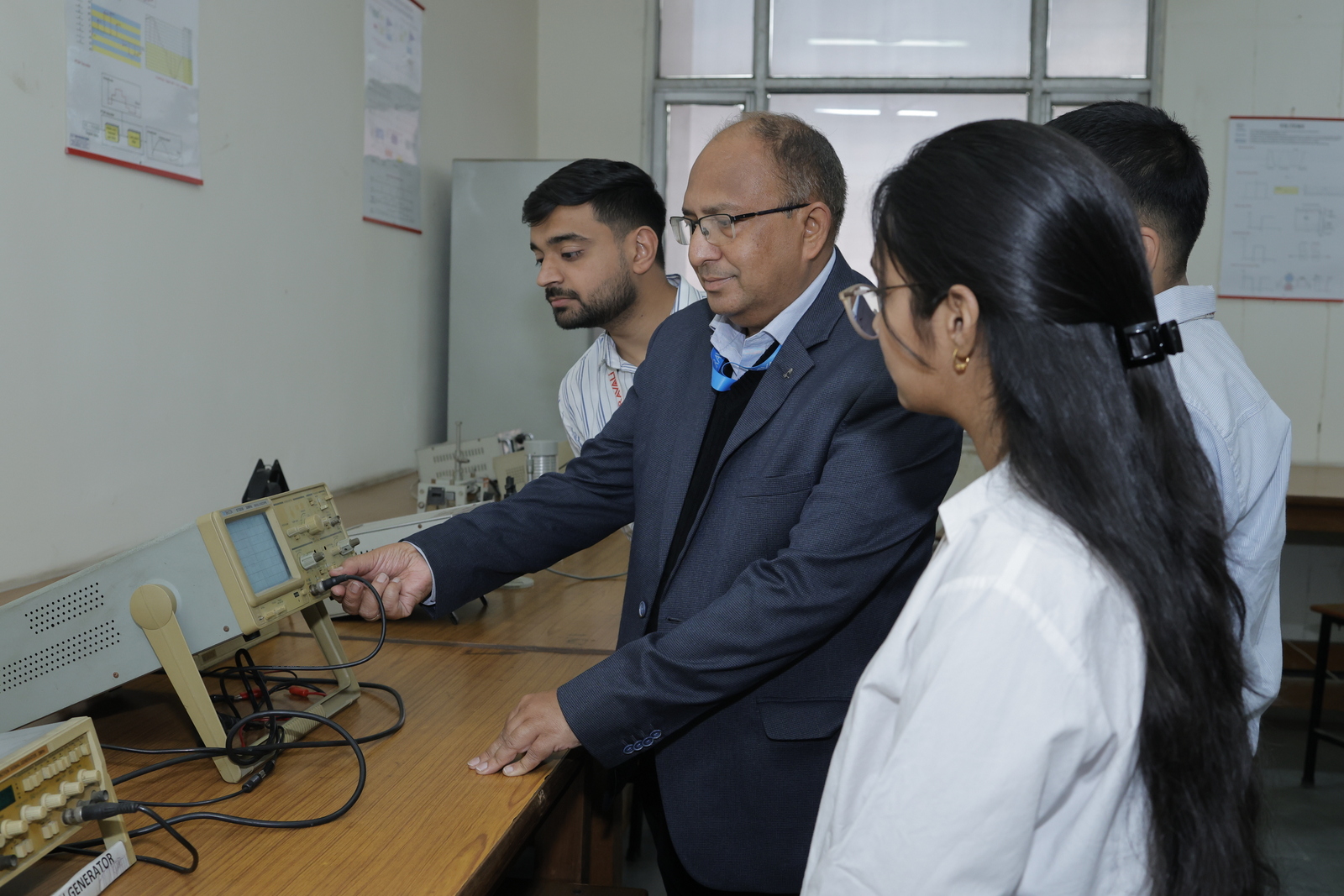
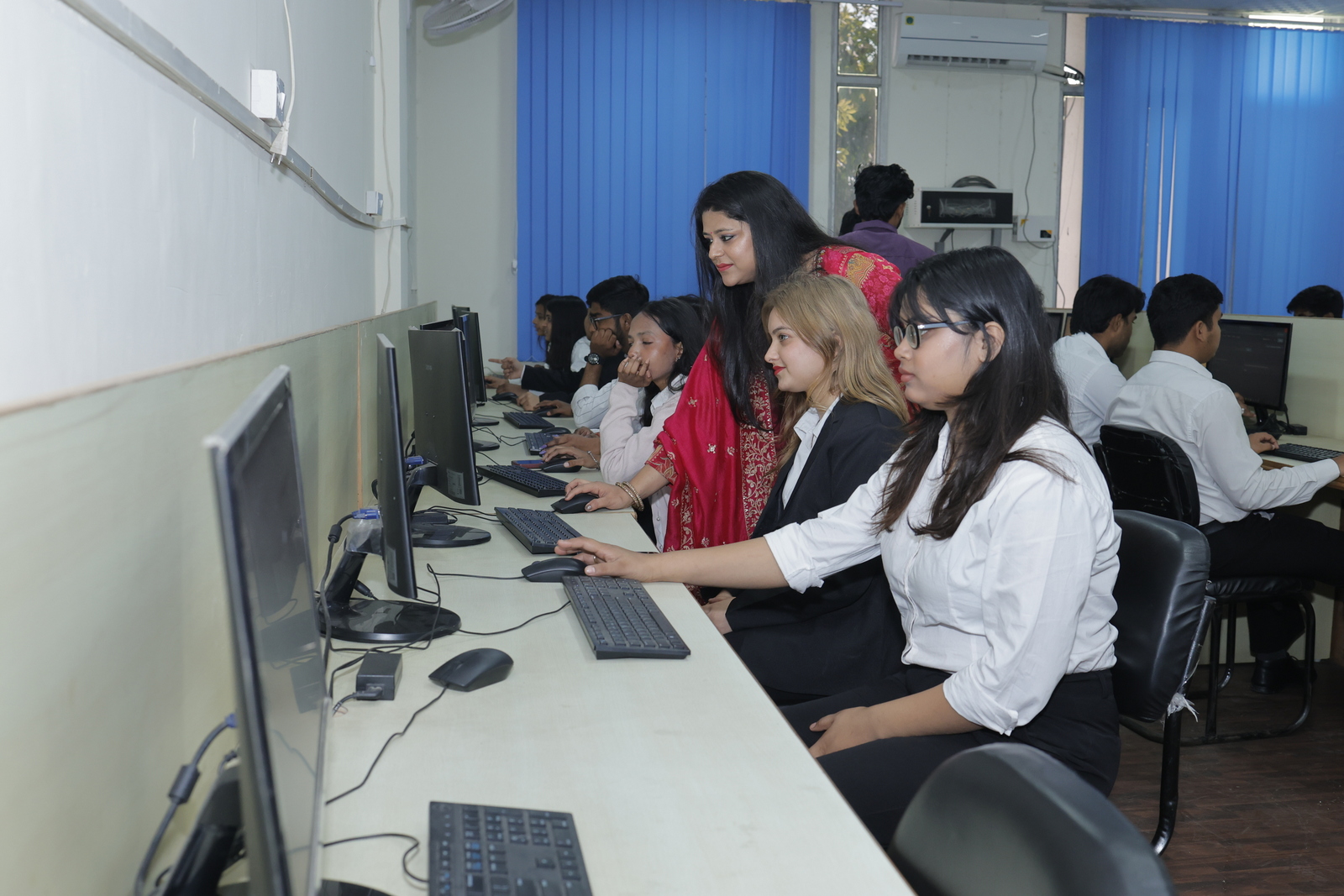
Our infrastructure supports ECE learning with specialized laboratories, workshop support, project spaces, and collaborative environments for technical development.